
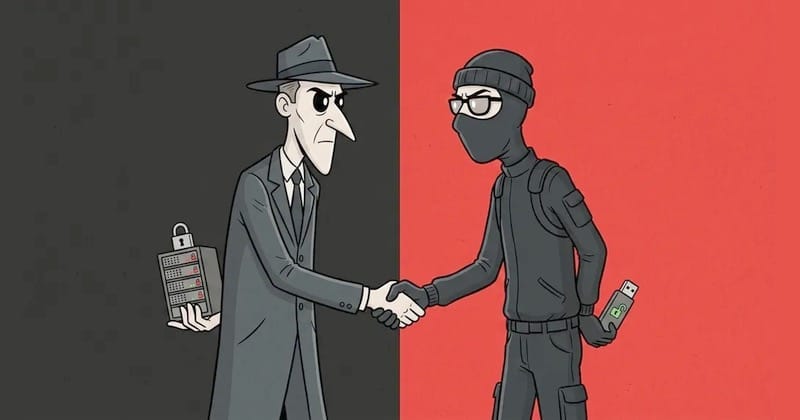
Company Hired Expert to Fight Hackers, But He Was Helping Them
A ransomware negotiator secretly shared victim information with the criminals. This betrayal shows why trust matters when dealing with cyberattacks.
Source
Graham Cluley
Original headline: The ransomware negotiator who was working for the other side
Plain-English summary by GetCyberRight. Read the full report at the source above.
When companies get hit by ransomware attacks, they often hire specialist firms to negotiate with the criminals. These experts are supposed to handle communications and help get the best outcome for the victim. However, one trusted negotiator was secretly working for the other side.
This person was sharing details about the victim's cyber insurance coverage and negotiation strategy directly with the attackers. This betrayal gave criminals an unfair advantage and likely resulted in higher ransom payments. Most families will never directly hire a ransomware negotiator.
Stay one step ahead of scammers
Weekly cybersecurity briefings for families. No spam, just the threats that matter and what to do about them.
However, this story matters because it shows how cyberattacks create desperate situations where people can be exploited twice. First by the criminals who encrypt their data, then by corrupt professionals who pretend to help. If your employer, your child's school, or your medical provider gets hit by ransomware, the organization's choice of response team affects whether your personal information gets recovered or permanently exposed.
- Immediately disconnect infected devices from the internet and your network.
- Do not pay any ransom without consulting law enforcement first.
- Report the attack to the FBI's Internet Crime Complaint Center at ic3.gov.
- If you must hire outside help, get referrals from law enforcement or your cyber insurance provider.
- Ask potential consultants for references and verify their reputation through independent sources. The best protection is prevention. Ransomware typically enters through phishing emails or unpatched software vulnerabilities. Train everyone in your household to recognize suspicious emails. Never click links or download attachments from unexpected messages, even if they appear to come from known contacts. Keep all computers, phones, and tablets updated with the latest security patches. Maintain offline backups of irreplaceable files like family photos. These simple habits make you a much harder target than most victims.
Curated from trusted cybersecurity sources by GetCyberRight
Source: Graham CluleyStay ahead of cyber threats
Get our free weekly digest. Real threats, plain language, what to do about them. No spam, ever.
More articles

Elon Musk's AI Tool Leaked Private Information: What Users Need to Know
If you used Grok Build CLI, your private code and confidential information may have been exposed. The company is deleting all uploaded data.
2 min readElon Musk's AI Tool Leaked Private User Data. Here's What Happened
xAI's Grok Build tool accidentally uploaded users' private code and information to company servers. All uploaded data will be deleted.
2 min read
SonicWall Security Flaws Put Business Networks at Risk
Two security holes in widely-used SonicWall devices were exploited by attackers before fixes existed. Here's what business owners and employees need to know.
3 min read
Microsoft Just Fixed 622 Security Flaws: What Your Family Needs to Know
Microsoft released a record 622 security patches this month, including two flaws hackers are already exploiting. Here's what to do right now.
3 min read