
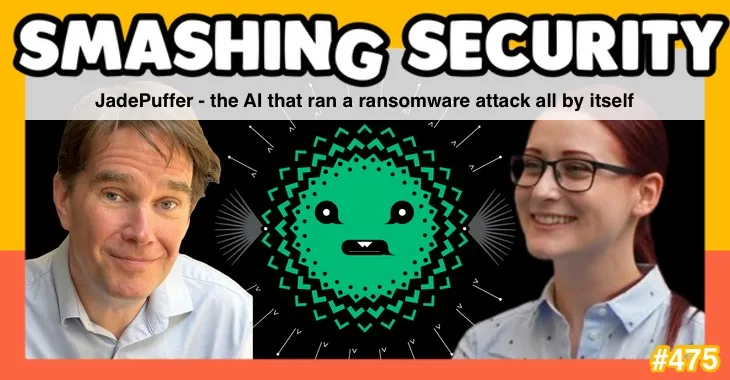
Artificial Intelligence Now Running Cyberattacks on Its Own
Researchers documented the first AI system that planned and executed a ransomware attack without human guidance. This represents a new threat.
Source
Graham Cluley
Original headline: Smashing Security podcast #475: JadePuffer – the AI that ran a ransomware attack all by itself
Plain-English summary by GetCyberRight. Read the full report at the source above.
Security researchers have documented something that has never been seen before. An artificial intelligence system called JadePuffer successfully planned and carried out a complete ransomware attack without human assistance. This is what experts call an agentic AI attack, meaning the AI made decisions and took actions on its own.
Separately, a 15-year-old boy used a chatbot to help him cancel nearly 47,000 anime streaming subscriptions in under four hours, showing how AI tools can amplify what one person can do. This development affects everyone who uses the internet, but the immediate risk to families is still relatively low.
Right now, these AI-driven attacks are still rare and primarily documented in research settings rather than widespread in the real world. However, the technology exists and will likely become more common. Criminals will use AI to create more sophisticated phishing emails, find security weaknesses faster, and automate attacks that previously required teams of skilled hackers.
You should take action now to prepare for this new reality. First, become more skeptical of emails, texts, and phone calls, even ones that seem perfectly written and legitimate. AI can now create messages without the spelling errors and awkward phrasing that used to signal scams.
Stay one step ahead of scammers
Weekly cybersecurity briefings for families. No spam, just the threats that matter and what to do about them.
Second, verify requests through a different method. If you get an email from your bank, call them using the number on your card, not the number in the email. Third, talk to your children and elderly relatives about AI-generated scams. Show them examples of deepfake videos and AI-generated voices so they know these technologies exist.
Fourth, keep all your devices and software updated. Security updates often patch vulnerabilities that AI systems might find and exploit. The rise of AI in cyberattacks means the bar for being a criminal is getting lower. People with no technical skills can now use chatbots to launch sophisticated attacks.
Your best defense is healthy skepticism combined with good security habits. Do not click links in unexpected messages. Do not share verification codes with anyone. Do not make decisions based on urgency or fear. Take time to verify before you act. These human decision points are still your strongest protection against both human and AI attackers.
Curated from trusted cybersecurity sources by GetCyberRight
Source: Graham CluleyStay ahead of cyber threats
Get our free weekly digest. Real threats, plain language, what to do about them. No spam, ever.
More articles
AI Runs First Fully Automatic Ransomware Attack: What Parents Need to Know
Researchers documented an AI system that carried out a complete ransomware attack by itself, raising concerns about future cyber threats.
2 min read
Fake Payment Apps Steal Information: Check If You're Affected
Scammers created fake versions of payment software to steal login credentials. If you or family members use payment apps, read this carefully.
2 min readFake Payment App Tools Stealing Information From Developers
Criminals created fake software tools that appeared to be from legitimate payment services like Paysafe and Skrill, targeting software developers with malware.
2 min read
Are Your Student's University Email and Files Safe? What College Families Need to Know
Hackers targeted email systems at U.S. and Canadian universities to steal passwords and spy on researchers. Students and faculty may be affected.
2 min read